

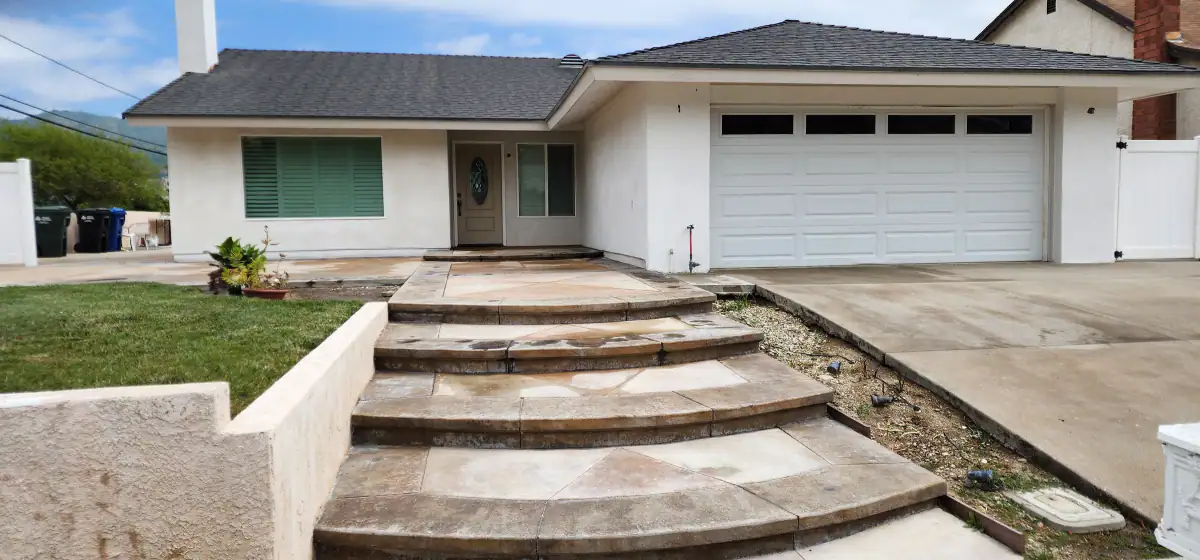
Stucco Repair and Installation in Ventura County
Cracks, patches around new windows, damage at the base of the wall, and new stucco for additions. We find out why it failed, fix what is behind it, and match the texture.


Stucco Repair & Installation with LE Construction
Stucco is the most common exterior finish in Ventura County, from Spanish Revival houses near the downtowns to tract homes built in the last fifty years. It is durable and fire resistant, but it is not waterproof by itself. Behind a traditional three-coat stucco wall are layers of building paper and flashing that keep water out of the framing. When those fail, the stucco can look fine while the wood behind it rots.
That is why a stucco repair starts with a question: why did it crack or stain? A thin crack from settling is cosmetic. A crack under a window corner that stays dark after rain often means water is getting behind the wall. Stucco that has crumbled at the bottom of the wall usually points to soil or irrigation against the weep screed. We open suspect areas, repair the paper, lath and flashing, and only then apply new stucco.
We also tie new stucco into existing walls when an addition, a new window or a new door opens up the exterior. Matching an existing texture, such as a smooth Santa Barbara finish, a sand finish or a heavy lace, takes practice. We test samples on a small area before finishing a whole wall.
What our stucco include
Crack repair
Routing and filling hairline and structural cracks, with the cause addressed first so the crack does not return.
Patches and texture matching
Patching holes left by old fixtures, vents, plumbing and windows, finished to match the surrounding texture and color.
Water damage repair
Removing stucco over wet areas, replacing rotted sheathing or framing, and rebuilding the paper, lath and flashing.
New stucco for additions
Three-coat stucco on additions and new walls, blended into the existing house at the corners and seams.
Weep screed and base repairs
Repairing stucco at the bottom of the wall and restoring clearance between the weep screed and soil or paving.
Color coats and refinishing
A new finish coat or elastomeric coating over sound stucco to refresh the color and even out patched areas.
Our stucco specialties
Each of these has its own page with more detail on how we plan and build it.
- Stucco RepairCracks, holes, damaged corners, patches around new windows and stucco crumbling at the base of the wall, repaired so the patch disappears and the water stays out..Read more
- Re-Stucco & Exterior ResurfacingWhen patching is no longer enough: a new finish coat over sound stucco, or full remediation down to the framing with new paper, lath and three-coat stucco where water has gotten in..Read more
How a stucco repair & installation project runs
Every step below is in writing before work starts, so you know what happens next and when.
Step 1: Inspection
We look at the cracks and stains, check moisture with a meter, look at windows, roof edges and grade, and decide whether the problem is cosmetic or water.
Step 2: Estimate
A written estimate for the stucco work and, separately, any repair behind it we can already see, with a note on what may change once the wall is open.
Step 3: Open and assess
For water problems, we remove stucco in the affected area to see the paper, lath and framing.
Step 4: Repair behind the wall
Rotted wood is replaced, and new building paper, flashing and lath are lapped correctly into the existing layers.
Step 5: Scratch, brown and finish
New stucco goes on in coats, with curing time between them, and the finish coat is matched to the existing texture.
Step 6: Color and cleanup
Color coat or paint to blend the repair, then cleanup of the work area and plants below it.
What we often find
These are the conditions we look for at the estimate, so they are in the price instead of turning into change orders.
Cracks at window and door corners
Stress concentrates at the corners of openings. Diagonal cracks there are common, and when they let water in, the flashing around the window is often the real problem.
Stucco buried by soil or paving
Code calls for clearance between the weep screed at the bottom of the wall and the ground or paving. When planters or patios cover it, water wicks up and the stucco and framing deteriorate.
Patches that do not match
A patch troweled smooth on a sand-finish wall stands out from the street. Texture and color matching are part of every repair we do.
Rot behind the wall
Failed paper or missing flashing lets water reach the sheathing and studs. The stucco may look sound until you press on it.
Ventura County specifics
Local conditions that change how we plan this work here.
Spanish Revival houses
Older stucco homes near downtown Ventura, Santa Paula and Ojai often have smooth or hand-troweled finishes that need a skilled hand to match.
Salt air and marine layer
Near the coast in Oxnard, Port Hueneme and Carpinteria, constant moisture and salt are harder on stucco, metal lath and fasteners, so flashing details matter even more.
Fire-resistant exteriors
Stucco is a noncombustible siding, and it is a common choice for homes being hardened against wildfire in the foothills.
What drives the cost
We put the price in writing before work starts. These are the choices and conditions that move it most.
Cosmetic or water damage
Filling cracks and patching costs far less than opening a wall to replace paper, lath and framing.
Texture and color
Matching a complex hand-troweled texture takes more time, and blending color may mean recoating a whole wall.
Size and height
Square footage, second-story walls and scaffolding add cost.
Hidden conditions
Rot behind the stucco is unknown until the wall is open. We price what we can see and tell you right away about what we find.
For published cost figures and what moves them here, read our Stucco Repair Cost in Ventura County: Cracks, Patches & Re-Stucco.
Energy upgrades in a project may qualify for GoGreen Financing.
Stucco by LE Construction
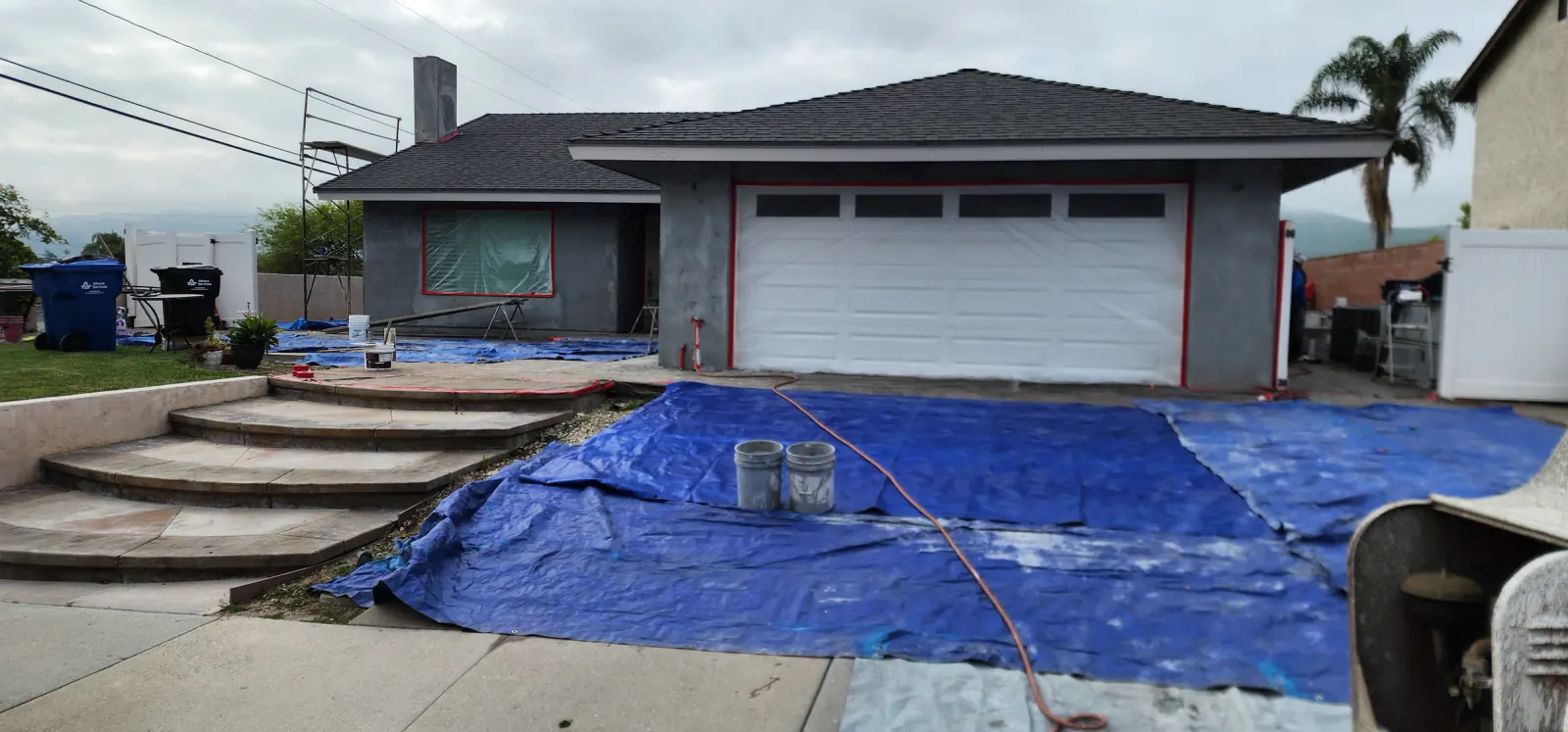
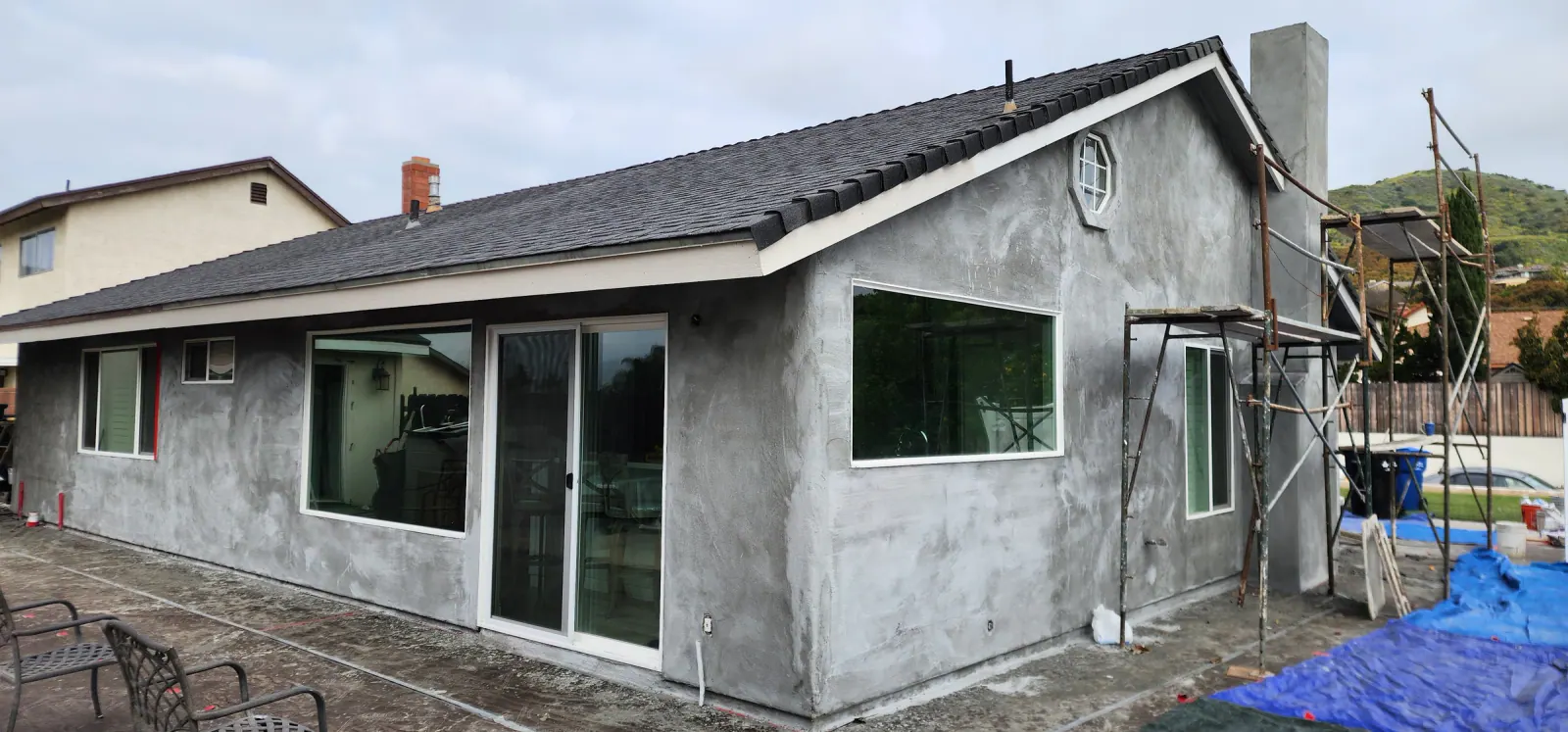
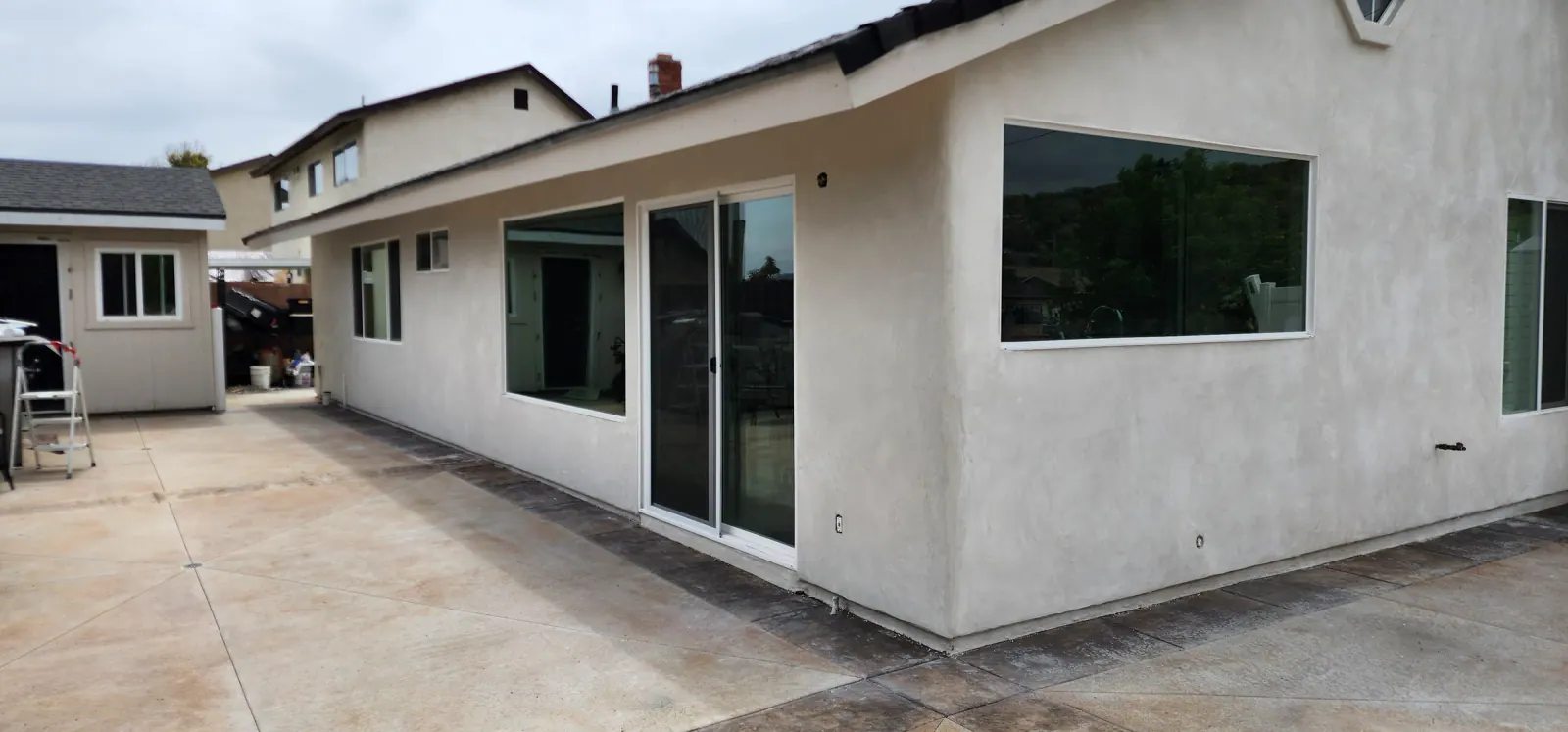
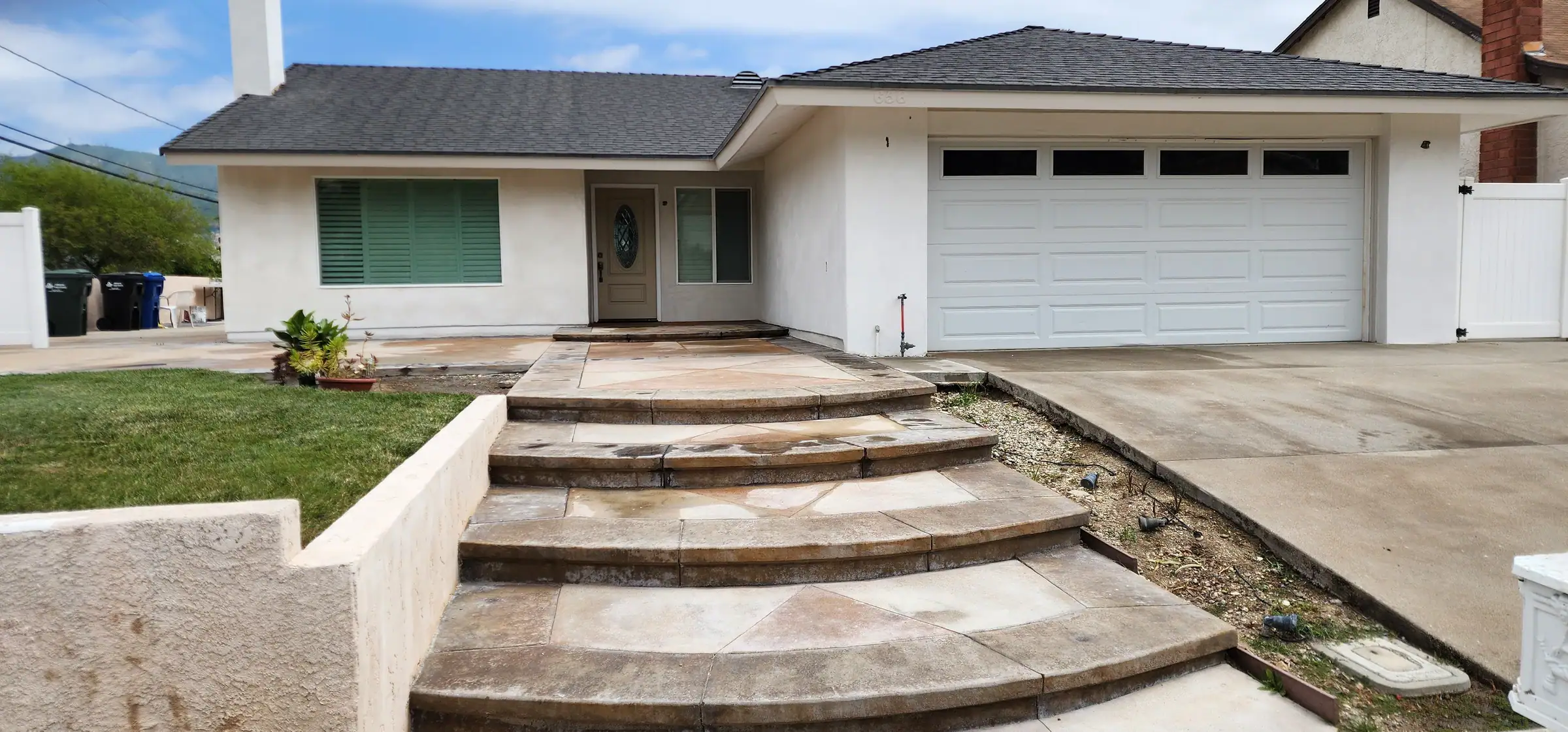
Photos from our own jobs.
What stucco clients say
Real Google reviews from LE Construction clients, quoted word for word.
EXCELLENT
5.0 out of 5, based on 17 Google reviews
Stucco near you
We offer stucco in 10 communities. Pick yours for local permit notes and details.
- Stucco Repair and Installation in Santa Paula, CA
- Stucco Repair and Installation in Oxnard, CA
- Stucco Repair and Installation in Carpinteria, CA
- Stucco Repair and Installation in Ventura, CA
- Stucco Repair and Installation in Camarillo, CA
- Stucco Repair and Installation in Thousand Oaks, CA
- Stucco Repair and Installation in Moorpark, CA
- Stucco Repair and Installation in Ojai, CA
- Stucco Repair and Installation in Fillmore, CA
- Stucco Repair and Installation in Somis, CA
Find out what the crack means
Send us photos or book a visit. We will tell you whether it is cosmetic or water, and what the repair takes.
Stucco FAQs
Are stucco cracks a sign of a structural problem?
Usually not. Thin cracks often come from normal shrinkage and settling and are mostly cosmetic. Wide cracks, cracks with one side higher than the other, or cracks that keep growing can point to foundation movement or framing problems. Cracks that let water in matter regardless of size. We check which kind you have before recommending a repair.
Can you match my existing stucco texture?
In most cases, yes. We look at the existing finish closely, test small samples and adjust the technique until it matches. Color is matched with a color coat or paint, and sometimes the best result comes from recoating a whole wall face so the patch disappears. We tell you which approach your wall needs.
Why is my stucco crumbling near the ground?
Most often because soil, mulch, a planter or a patio has been built up over the weep screed at the bottom of the wall, so water soaks into the stucco from below. Sprinklers spraying the wall make it worse. The fix is to restore clearance and drainage, repair the damaged stucco and check the framing behind it.
Should I re-stucco or just repaint?
If the stucco is sound and the problem is fading, small cracks or old patches, a new color coat or elastomeric coating may be all you need. If there is widespread cracking, delamination or water damage behind the wall, re-stucco or targeted replacement is the better fix. We test the wall before recommending either.
Related services
Where we work
- Santa Paula, CA5–12 min from Santa Paula
- Oxnard, CA20–40 min from Santa Paula
- Carpinteria, CA38–60 min from Santa Paula
- Ventura, CA15–35 min from Santa Paula
- Fillmore, CA15–25 min from Santa Paula
- Somis, CA22–35 min from Santa Paula
Helpful pages
- Stucco Repair Cost in Ventura County: Cracks, Patches & Re-Stucco
Cost guide
- Craftsman & Spanish-Style Home Remodels in Santa Paula and Ojai
Design
- Dry Rot Repair in Coastal Ventura County Homes
Costs
- Fall Home Maintenance Checklist for Ventura County (Before the Rains)
Seasonal
- Insurance Discounts for Fire-Hardened Homes in California (Safer from Wildfires)
Seismic & Fire
- About LE Construction
Licensed since 2008, in business since 1999
- Request a free estimate