

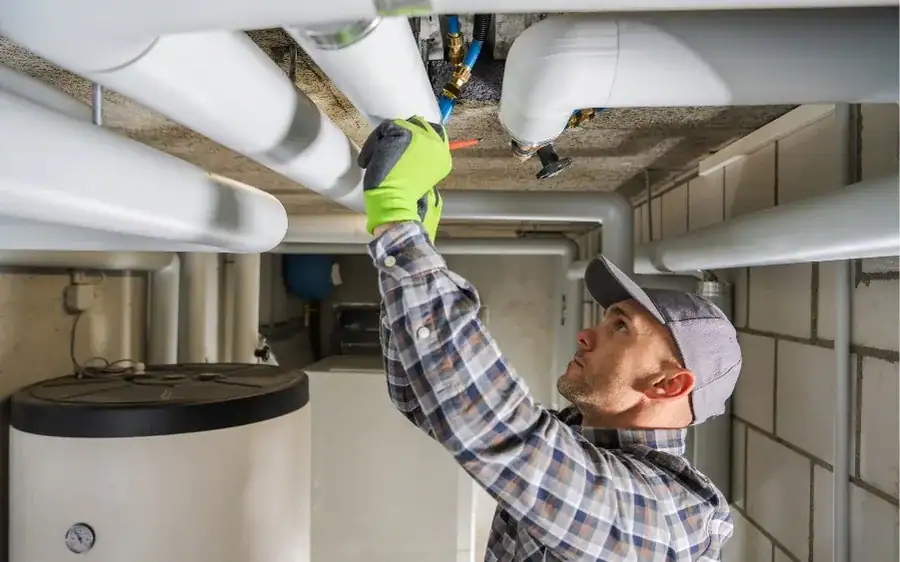
Water Damage Repair and Reconstruction
Once the leak is stopped and the house is dry, the room still has to be put back together. We rebuild walls, ceilings, floors, cabinets and tile, and fix the plumbing or flashing that caused it.


Water Damage Repair with LE Construction
Water damage happens in two stages. First comes mitigation: stopping the water, pulling out soaked materials and drying the structure with fans and dehumidifiers. That is the job of a water mitigation or restoration company, often sent by your insurer. Second comes reconstruction: rebuilding everything that was removed or ruined. That second stage is our work. It is a remodeling job, and it needs a licensed contractor.
Reconstruction is rarely a single trade. A leak under a bathroom sink can take out the vanity, the tile floor, the subfloor below it and the ceiling of the room underneath. A failed water heater can soak drywall, baseboards and flooring across two rooms. As a general building contractor, we handle the framing, plumbing, drywall, cabinets, tile and flooring under one contract, and we can fix the source as part of the job.
We give you a detailed written estimate that you can share with your insurance adjuster, and we document what we find when walls are open. If we find more damage than the mitigation company saw, such as rot that has been developing for years, we photograph it and tell you before going further.
What our water damage repair include
Drywall and ceilings
Replacing wet or stained drywall and sagging ceilings, matching the existing texture and repainting so the repair disappears.
Framing and subfloor
Replacing rotted studs, plates, joists and subfloor, especially around toilets, tubs, showers and dishwashers.
Cabinets and counters
Replacing swollen sink bases and vanities, and resetting or replacing counters that had to come off.
Flooring and tile
New tile, hardwood, laminate or vinyl plank, carried through the affected rooms so there is no visible patch line.
Source repairs
Repiping leaking supply lines, replacing failed valves and drains, resetting toilets, and repairing window flashing or stucco that let rain in.
Upgrades while it is open
If the room has to be rebuilt anyway, many owners take the chance to improve it. We price the like-for-like repair and the upgrade separately.
Our water damage repair specialties
Each of these has its own page with more detail on how we plan and build it.
- Water Damage ReconstructionAfter the mitigation crew pulls out the wet materials and dries the house, we rebuild: subfloor, framing, drywall, cabinets, tile and flooring, matched to the rest of your home..Read more
- Dry Rot & Termite Damage RepairTermite treatment kills the insects, and fixing the leak stops the rot.Read more
How a water damage repair project runs
Every step below is in writing before work starts, so you know what happens next and when.
Step 1: Confirm it is dry
We check moisture readings before closing anything up. Building over wet framing traps the problem inside the wall.
Step 2: Find the source
We confirm what caused the leak and that it has been fixed, or we fix it ourselves as part of the scope.
Step 3: Written estimate
A line-item estimate for the rebuild, with like-for-like repair and any upgrades shown separately for your insurer.
Step 4: Repair structure
Rotted framing and subfloor are replaced and, where the work calls for it, inspected under a permit.
Step 5: Rebuild finishes
Drywall, texture, paint, cabinets, tile and flooring go back in, matched to the rest of the house.
Step 6: Walkthrough
We walk the finished rooms with you. Any issue you report within 30 days of completion is corrected at no charge.
What we often find
These are the conditions we look for at the estimate, so they are in the price instead of turning into change orders.
Slow leaks found late
A drip at a supply line or a failed wax ring can go unnoticed for years. By the time a stain shows, the subfloor or the framing is often soft.
Leaks from showers without waterproofing
Older tile showers that relied on grout alone often soak the wall behind them. Repairing the wall without fixing the shower only buys time.
Roof and window leaks
Water from a bad flashing detail can travel along framing and show up far from where it enters. We trace it before rebuilding.
Mold behind finishes
Visible mold or a musty smell after a leak calls for a mold assessment. Remediation by a qualified specialist comes before reconstruction.
Ventura County specifics
Local conditions that change how we plan this work here.
Winter storms
Most of Ventura County's rain falls in a few winter storms, and that is when roof, window and stucco leaks show up. Repairs get scheduled before the next storm when possible.
Older plumbing
Galvanized supply lines and cast iron drains in homes from the 1950s through the 1970s are common sources of slow leaks.
Raised foundations and crawlspaces
In raised-floor houses, leaks can soak the crawlspace and the sill plate. We check the framing under the house, which also matters for seismic retrofits.
What drives the cost
We put the price in writing before work starts. These are the choices and conditions that move it most.
How far the water traveled
One wall and a ceiling patch costs far less than two rooms of flooring and a kitchen sink base.
Structural damage
Replacing joists, subfloor or studs adds cost compared with drywall and finish work alone.
Matching finishes
Discontinued tile or flooring can mean replacing a larger area so everything matches.
Upgrades
Changes beyond like-for-like are usually not covered by insurance and are priced separately.
Energy upgrades in a project may qualify for GoGreen Financing.
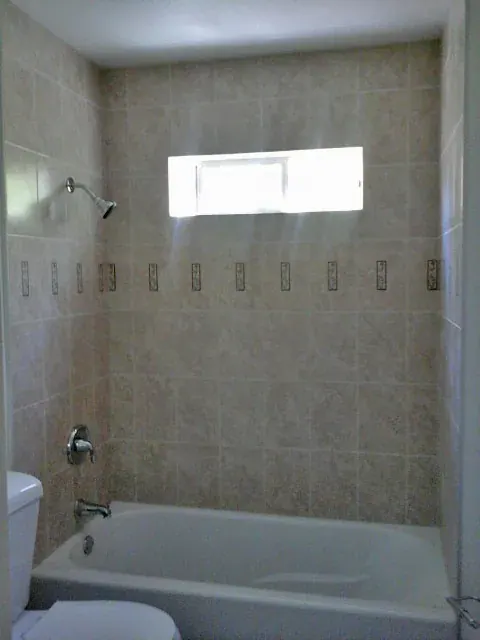
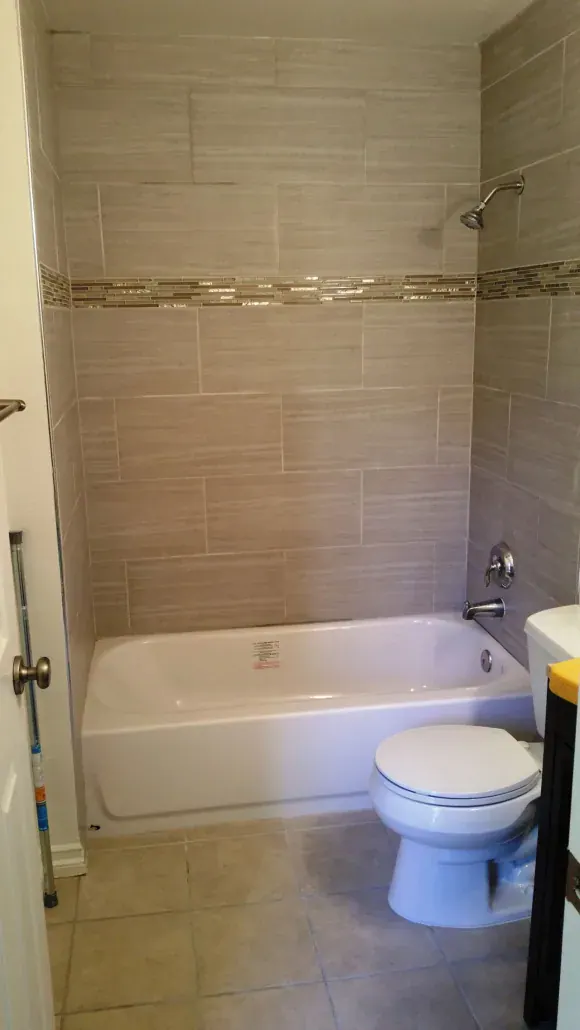
Water Damage Repair by LE Construction
Photos from our own jobs.
What water damage repair clients say
Real Google reviews from LE Construction clients, quoted word for word.
EXCELLENT
5.0 out of 5, based on 17 Google reviews
Water Damage Repair near you
We offer water damage repair in 10 communities. Pick yours for local permit notes and details.
- Water Damage Repair in Santa Paula, CA
- Water Damage Repair in Oxnard, CA
- Water Damage Repair in Carpinteria, CA
- Water Damage Repair in Ventura, CA
- Water Damage Repair in Camarillo, CA
- Water Damage Repair in Thousand Oaks, CA
- Water Damage Repair in Moorpark, CA
- Water Damage Repair in Ojai, CA
- Water Damage Repair in Fillmore, CA
- Water Damage Repair in Somis, CA
Put the room back together
Once the water is out, call us. We will check that it is dry, find the source and give you a written rebuild estimate.
Water Damage Repair FAQs
Do you do the water extraction and drying?
No. Extraction, drying and dehumidifying are done by water mitigation companies with the specialized equipment for it. We come in after that to rebuild what was removed or damaged. We check moisture before closing walls, and if the structure is still wet, we wait.
Can you work with my insurance company?
Yes. We provide a detailed written estimate you can submit to your adjuster, and we photograph conditions when walls and floors are opened. Your policy and the adjuster decide what is covered. Any upgrades you choose beyond the original materials are shown separately, since insurers usually do not pay for them.
How do I know if there is still hidden water damage?
Soft or springy floors, bubbling paint, stains that grow, a musty smell, or baseboards pulling away from the wall all suggest moisture behind finishes. A moisture meter can confirm it without opening the wall. We check the areas around a known leak before quoting, since water rarely stays where it started.
Should I replace old pipes while the walls are open after a leak?
If the leak came from galvanized or aging supply lines, it is worth considering. Other fittings of the same age are likely to fail too, and replacing pipe is far cheaper when the drywall is already off. We can price a partial or whole-house repipe alongside the repair.
Related services
Where we work
- Santa Paula, CA5–12 min from Santa Paula
- Oxnard, CA20–40 min from Santa Paula
- Carpinteria, CA38–60 min from Santa Paula
- Ventura, CA15–35 min from Santa Paula
- Fillmore, CA15–25 min from Santa Paula
- Somis, CA22–35 min from Santa Paula
Helpful pages
- Dry Rot Repair in Coastal Ventura County Homes
Costs
- Drywall Repair Cost: Holes, Cracks, Water Stains & Earthquake Damage
Costs
- Fall Home Maintenance Checklist for Ventura County (Before the Rains)
Seasonal
- Slab Leak Repair & Rebuild: Costs and What to Expect
Costs
- About LE Construction
Licensed since 2008, in business since 1999
- Request a free estimate