

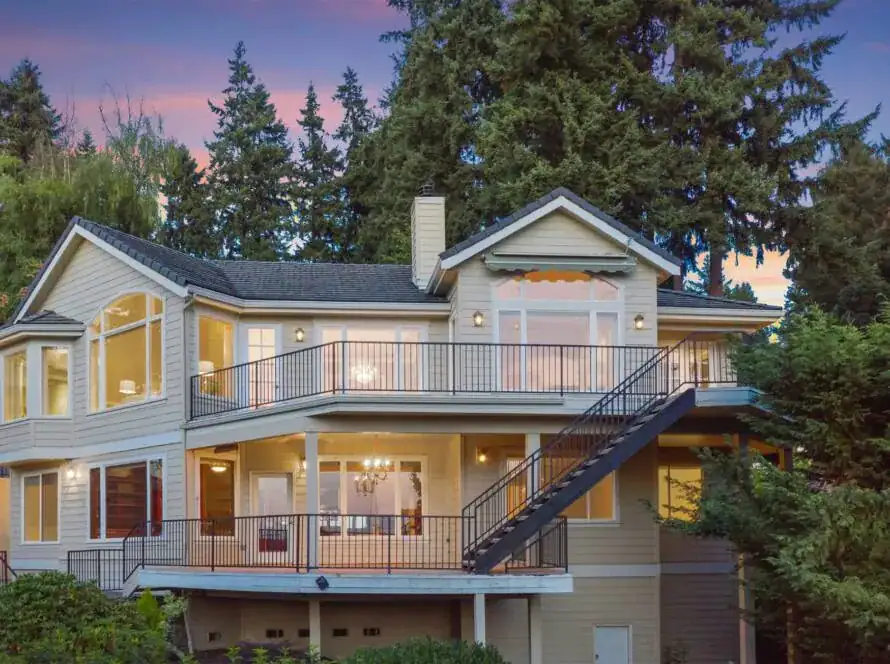
Wildfire Home Hardening & Fire Rebuilds
Fire-Resistant Siding and Exteriors
Replacing combustible wood siding, trim and decks with stucco, fiber cement and ignition-resistant materials, and upgrading windows to tempered dual-pane glass.


Fire-Resistant Siding & Exteriors
Embers land at the base of walls, in corners, on decks and along window sills. If the siding, trim or deck boards there are combustible, a small ember can start a fire that climbs the wall into the eaves and windows. Fire-resistant exterior materials do not make a house fireproof, but they remove the fuel embers need at the most exposed spots.
California's Chapter 7A sets standards for exterior walls, windows and decks on new construction in fire hazard zones. For existing homes, it is a practical guide for what to upgrade, often starting with the lower few feet of wall, the deck and any wood fences attached to the house.
Siding materials
Exterior walls in fire hazard zones must be noncombustible, ignition-resistant, or part of an assembly tested to the state's standard. In practice, that means materials like stucco and fiber cement.
Stucco
Noncombustible, durable and already common in Ventura County. Matches many existing homes.
Fiber cement
Noncombustible boards and panels that look like wood lap siding or shingles, painted to suit the house.
Trim and corners
Fiber cement or other compliant trim, since wood trim can ignite even on a stucco house.
Windows and glass
Radiant heat can break single-pane glass, letting embers and flames inside. Chapter 7A calls for multipane glazing with at least one tempered pane, or other tested assemblies. Replacing old single-pane windows with tempered dual-pane units also improves energy efficiency and noise. When siding is being replaced, it is the right time to replace windows and flash them correctly.
Decks, fences and the base of the wall
A burning deck or a wood fence attached to the house exposes the wall above it to flame. Deck boards, framing and stairs can be rebuilt with materials that meet wildfire standards, and the space under decks should be kept clear or enclosed. The first few feet of fence connecting to the house can be replaced with metal or masonry. At the base of walls, keeping a noncombustible strip next to the foundation reduces ignition where embers pile up.
From our clients
Real Google reviews from LE Construction clients, quoted word for word.
EXCELLENT
5.0 out of 5, based on 17 Google reviews
Take the fuel off the walls
We will walk your exterior, prioritize the upgrades and give you a written price for each.
Fire-Resistant Siding & Exteriors: FAQs
Is stucco fire resistant?
Yes. Stucco is a noncombustible cement-based material, and a properly installed three-coat stucco wall is one of the more fire-resistant common exteriors. Vents, eaves, windows and trim on a stucco house still need attention, since they can be weak points.
Is fiber cement siding allowed in fire hazard zones?
Fiber cement siding is noncombustible and is widely used to meet wildfire construction requirements. The installation details, trim and the products used at corners and openings should also comply. We confirm product listings for your jurisdiction.
Do I have to replace all my siding at once?
Not necessarily. Many owners start with the most exposed areas: the lower few feet of walls, sides facing brush or slopes, and areas next to decks or fences. Others replace one elevation at a time. We prioritize based on your lot and budget.
Will fire-resistant upgrades help with my insurance?
It may. California regulations require insurers to recognize certain wildfire safety measures in their rates, and documented home hardening is part of that. Discounts depend on your insurer and policy. We provide a record of the upgrades we complete.
Related pages
- Wildfire Home Hardening & Fire Rebuilds (overview)
- Ember-Resistant Vents & Eaves
- Fall Home Maintenance Checklist for Ventura County (Before the Rains)
Seasonal
- Insurance Discounts for Fire-Hardened Homes in California (Safer from Wildfires)
Seismic & Fire
- Rebuilding After the Mountain Fire: Permits, Fee Waivers & Timeline
Seismic & Fire